Word Search Themes: Why Familiar Words Make Better Puzzles
Pick up a generic word search and the list might mix AARDVARK, ZEPHYR and OBLIQUE for no reason at all. Pick up one of ours, and every word belongs to a place you know: a diner counter, a garden, a kitchen table. That difference is deliberate.
Recognition is the fun
The pleasure of a word search is the moment of recognition — spotting JUKEBOX and picturing one. Familiar, concrete words give that moment freely. Obscure vocabulary turns the same puzzle into a spelling test, where you are hunting letter patterns for words you have never used. Both are valid puzzles, but they are different pastimes, and for relaxed daily solving we know which one we prefer.
Themes give the grid a story
A themed list also changes how you search. Knowing the theme is "In the Garden" primes you: TOMATO, SHOVEL and SUNFLOWER start to suggest each other, and finding one word reminds you of the next. The list stops being 8 separate chores and becomes one small world to explore.
The themes we use
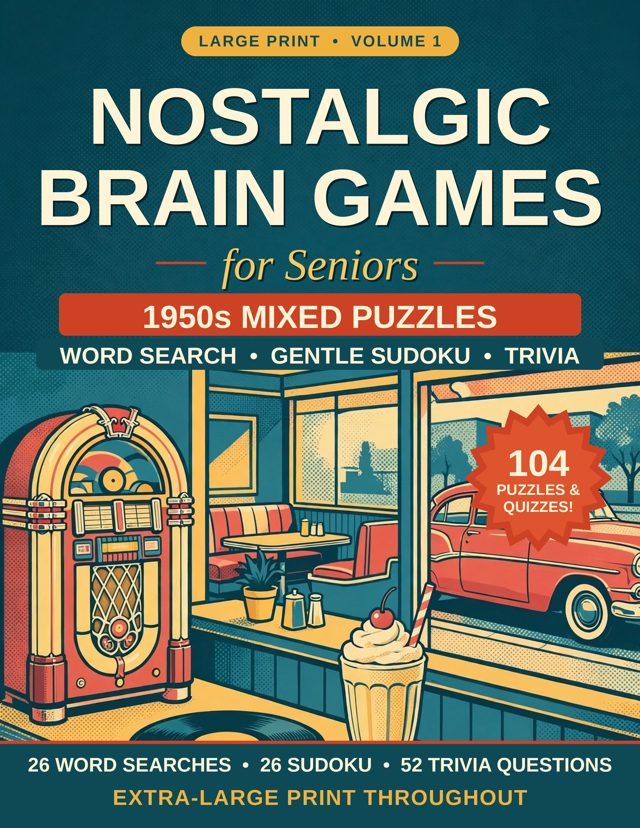
- 1950s nostalgia — the heart of our book series: diners, drive-ins, the early Space Age, poodle skirts and small-town main streets. Everyday words from a decade many of our readers know first-hand.
- 1960s nostalgia — miniskirts and moon rockets, from the second book in the series.
- Everyday favourites — the beach, the library, teatime, farm life, the four seasons: themes that belong to no decade and every reader.
Every theme page in our word search collection has a few words of introduction, and every puzzle hides exactly eight words — a size chosen so a puzzle fits comfortably into a coffee break. If a theme sparks a memory, that is not an accident. That is the design.